
Products ·
HMD vs Foil: Choosing Hookah Charcoal for Heat Management
What changes when a lounge uses a heat-management device rather than foil, and how to test coal placement, airflow and heat consistency.

An HMD (heat-management device) and a foil-covered bowl expose hookah charcoal to different contact surfaces, airflow and placement options. There is no universal “best coal for every HMD”. The suitable shape depends on the device, the bowl, how many pieces fit without crowding, and the operating method specified by its manufacturer.
What changes between foil and an HMD?
With foil, hot pieces rest above a perforated barrier, and their positions can be adjusted over a relatively open area. An HMD creates a different enclosure and contact geometry, sometimes with adjustable vents or lids. That changes how heat reaches the contents of the bowl and how rapidly the charcoal receives air.
Do not assume that two pieces of the same nominal size behave alike. Physical dimensions, mass, density and combustion characteristics all matter.
Should you choose cubes, bars or other shapes?
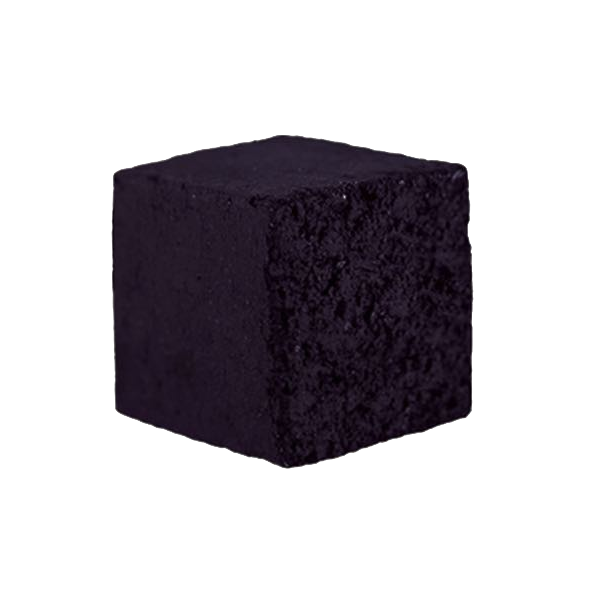
Cubes are convenient to arrange in many familiar configurations. A bar may place heat along a longer line; other moulded shapes may contact the device differently. Before agreeing a bulk order, test the candidate shape in the actual device used by customers or staff.
The SHAMAN charcoal range includes several cube sizes and additional profiles. Match the product to your intended bowl and HMD rather than choosing only on pack artwork or a single online recommendation.

A repeatable trial for a lounge
- Choose one bowl, one HMD or foil setup and one operating procedure.
- Record the number, size and initial weight of coal pieces.
- Use a consistent preparation protocol and note airflow settings.
- Record the time staff need for setup and the number of replacements.
- Observe ash handling, broken pieces and variation between batches.
- Repeat on different days and across more than one pack.
Avoid treating subjective smoke flavour as a precise laboratory measure. Always comply with the manufacturer's heat and fire-safety instructions; an HMD does not remove carbon monoxide risks.
What should wholesalers document?
List the device models common in the destination market, preferred pieces per session, shape tolerances and retail or master-carton format. This gives a manufacturer enough detail to discuss production and sample quantities.
Frequently asked questions
Can any coconut cube be used in any HMD? Not necessarily. Fit and manufacturer guidance must be checked.
Does a lid guarantee longer burn time? No. Its effect depends on airflow, setup and the particular device.
Should a lounge standardise one size? Standardisation helps stock control, but first verify suitability across the venue's devices.
Make a device-to-charcoal compatibility sheet
Instead of choosing a cube from a photograph, distributors can test a specific charcoal profile against a list of devices commonly sold in their market. Record the HMD model, internal dimensions, manufacturer's operating restrictions, number of permitted pieces, how pieces sit without becoming unstable and whether their placement obstructs intended airflow.
| Record | Why it matters |
|---|---|
| Exact HMD model | Different designs have different spaces and vent systems |
| Charcoal dimensions | Nominal size may not equal actual finished tolerance |
| Stable placement | Overcrowding or protruding pieces can create hazards |
| Repeat test | One successful session is not proof of batch consistency |
What about foil? Repeat the same data collection with the intended foil and bowl combination, rather than assuming foil results predict HMD results. Never make blanket promises of “more heat” or “longer burn” from a cube size alone. That gives a professional buyer a testable purchasing decision.
Send your equipment requirements to SHAMAN to explore the most relevant product shapes and samples.